
CRM + analytics for live commerce
AfterShow
A CRM, analytics, messaging, and audience-capture platform built around the problems I encountered running a live-commerce business.
Visit AfterShow ↗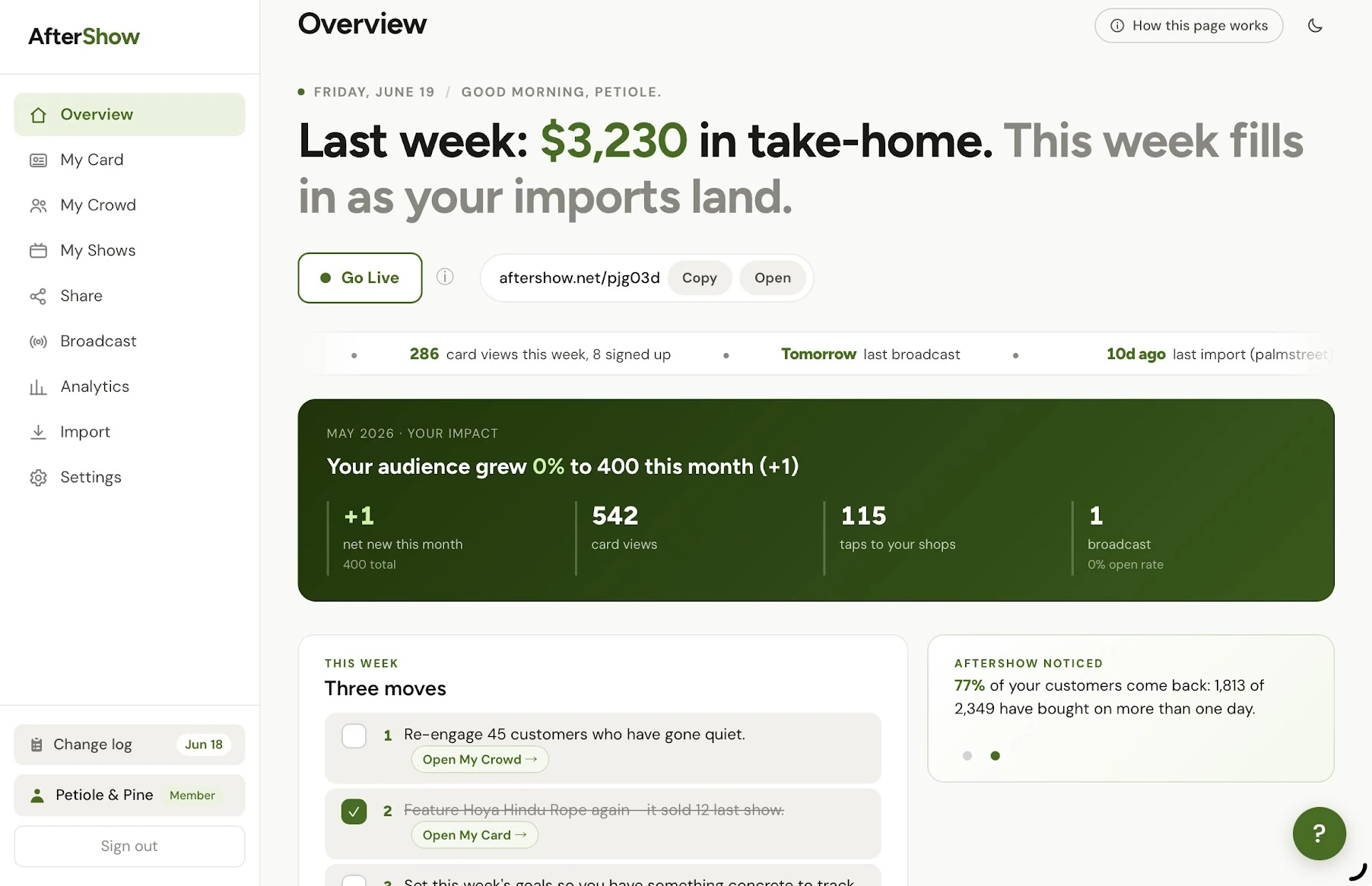
The motivation
I was comfortable paying platform fees in exchange for access, reach, and infrastructure. What bothered me was realizing that I was also renting the foundation of my business. If the platform changed direction or disappeared, much of what I had built could disappear with it.
AfterShow began with that concern. I wanted to create something people running businesses like mine could use to safeguard what they had built, better understand their customers, and keep growing beyond the boundaries of any one platform. The goal is not to replace the platforms that make live commerce possible. It is to give independent shops more control over the businesses they are building.
The approach
The product starts with work I already know: capturing customer information with consent, understanding what happened during a show, and knowing what needs follow-up. I build outward only when a feature removes repeated work, reduces risk, or helps a shop make a better decision.
That means treating customer relationships, messaging, analytics, and discovery as one connected system rather than a stack of unrelated tools. The standard is simple: each feature should make the shop more capable without making the work harder to understand.
What exists today
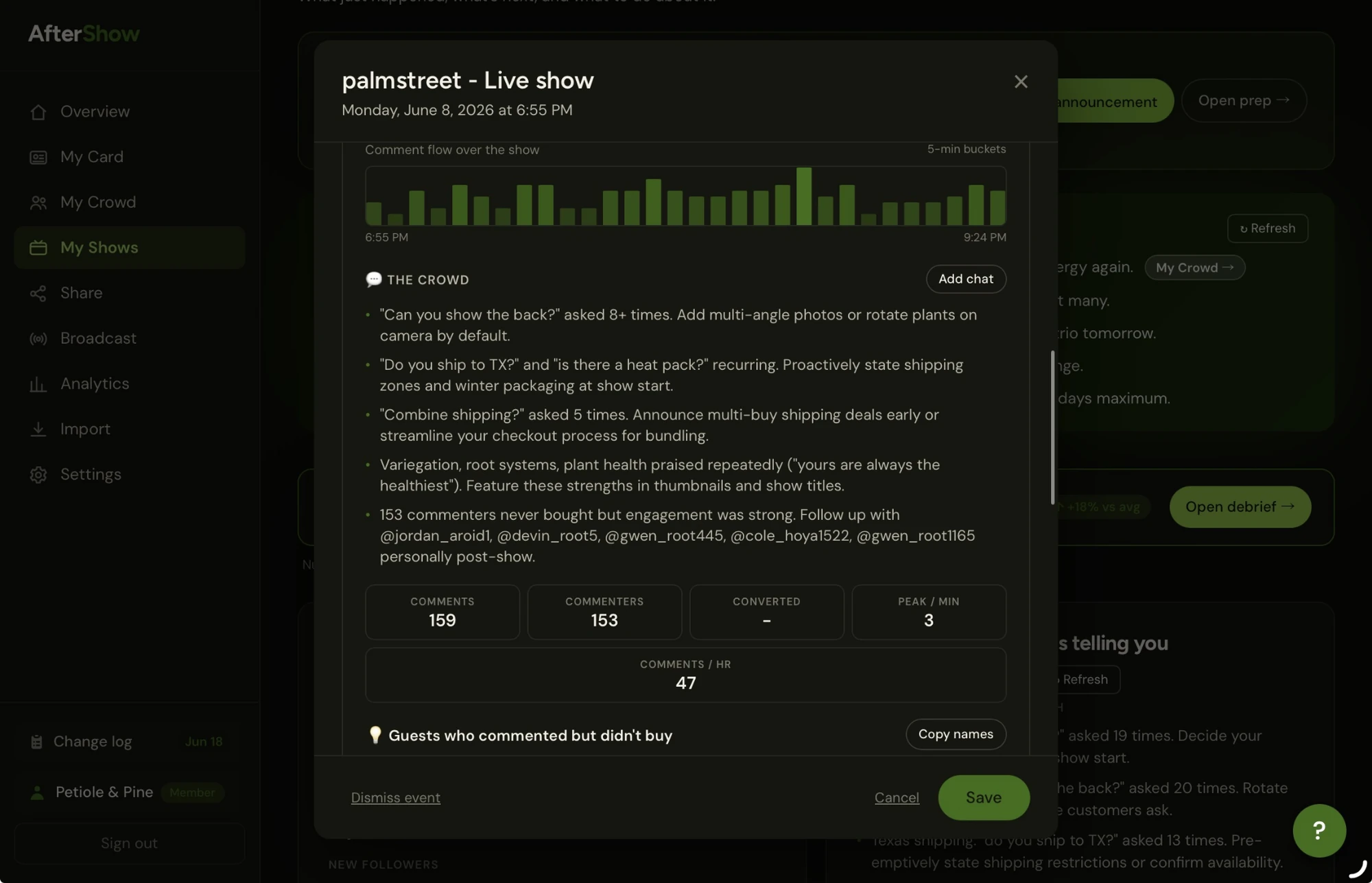
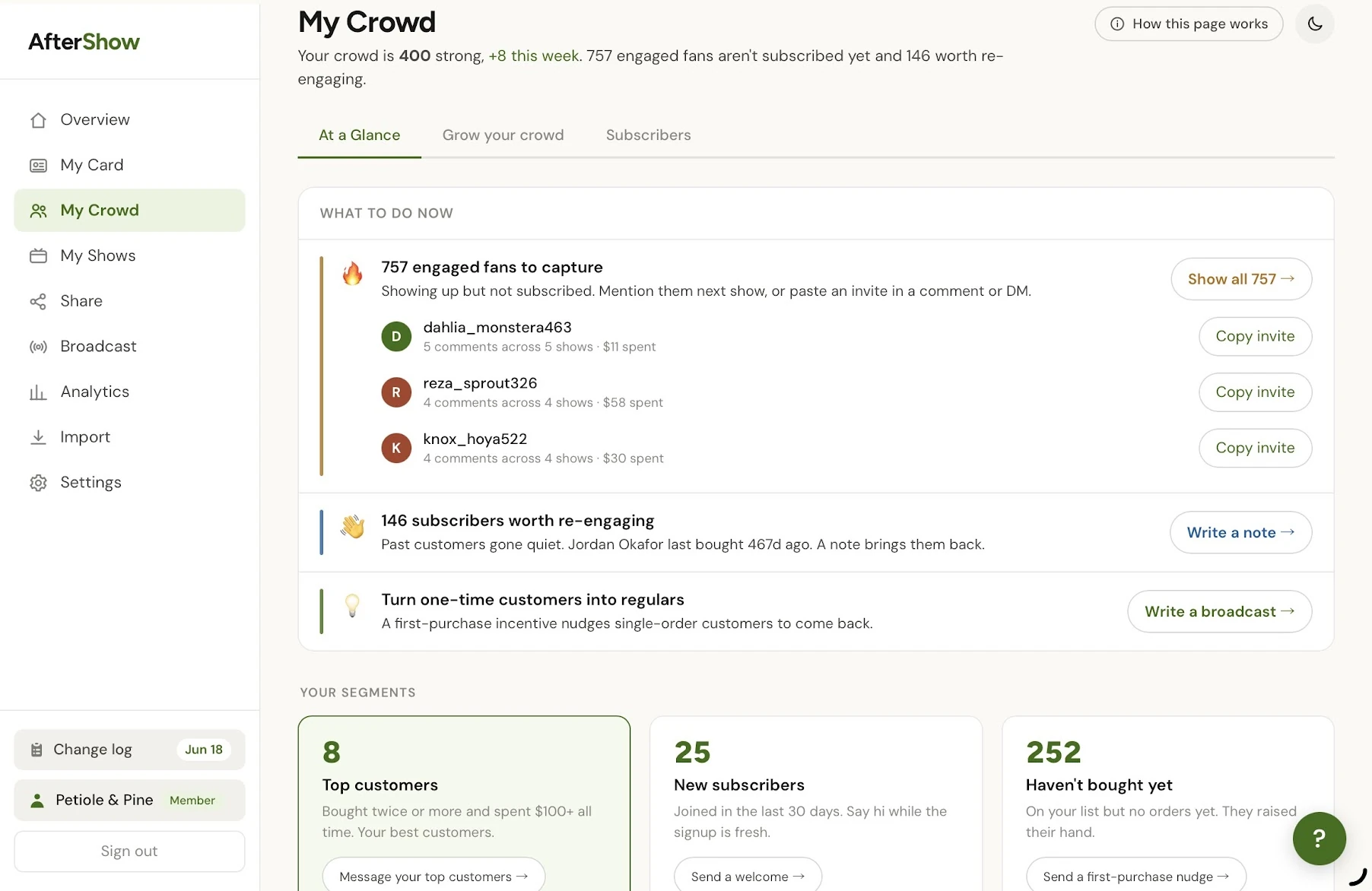
AfterShow is in closed beta. A shop can import its sales exports from Palmstreet, Whatnot, eBay, Etsy, Shopify, and several other platforms, see what happened across all of them in one place, collect signups through a public shop card, and email that audience directly. My own shop is the first test case - my order history is the data every feature gets checked against.
I am not a software developer. I built AfterShow by directing AI coding agents, reading what they produce, and deciding what ships. Every change goes to a staging copy of the site first, and nothing reaches production until it has been validated there by hand. The failure I guard against before any other is one shop seeing another shop's customers, so security review is part of the build, not a finishing step.